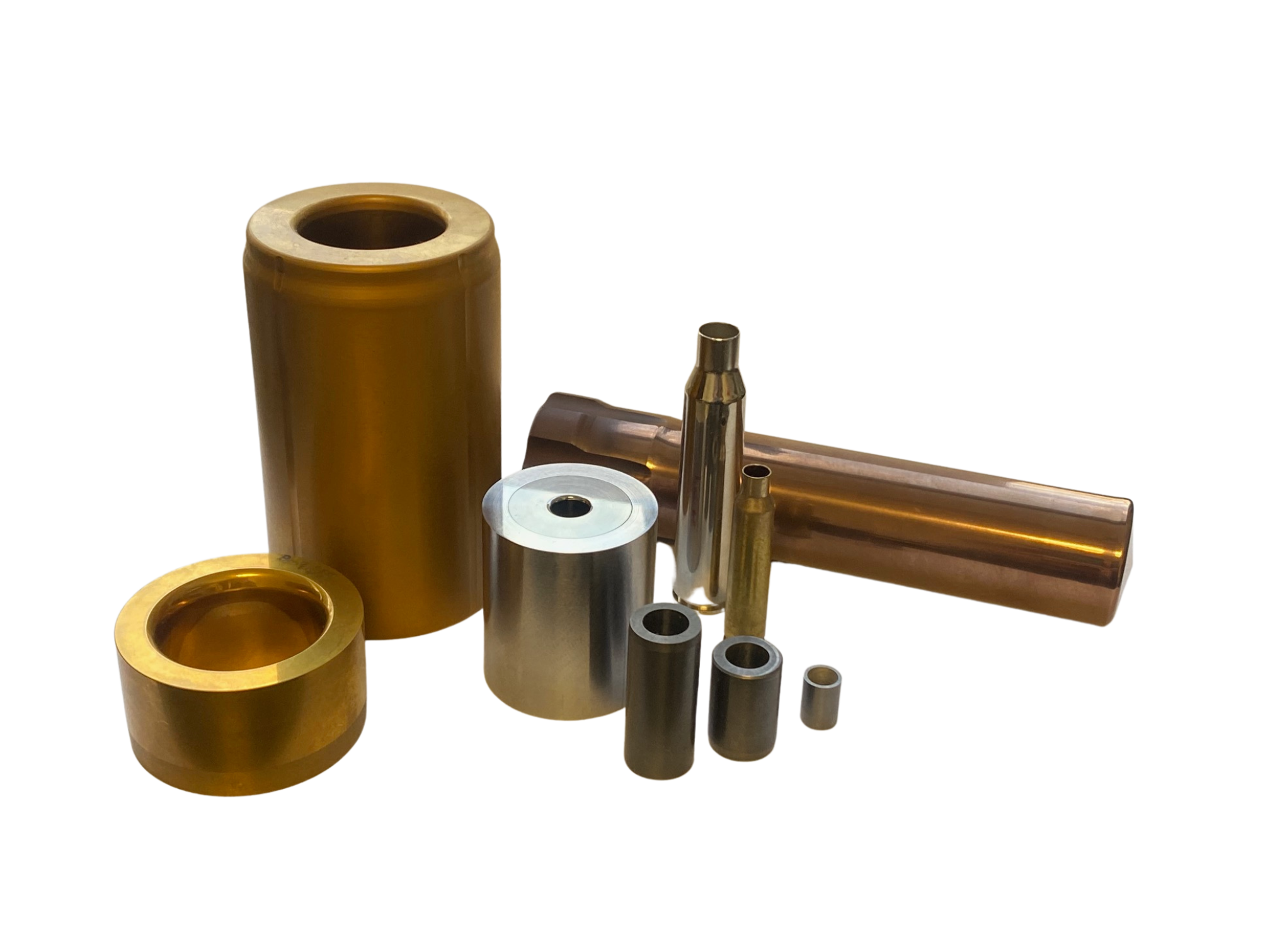

When it comes to manufacturing precision metal parts, tool life and performance are everything. Choosing the right carbide grade for your application can make the difference between a die that delivers consistent, long-lasting results and one that wears prematurely under stress. If you’re a manufacturer working with Cold Form Dies and extrusion dies, understanding the strengths and limitations of various carbide grades is essential!
Understanding Carbide Grades
Carbide is one of the hardest materials used in tooling applications. But, not all carbide grades are created equal. The specific composition—mainly the grain size and cobalt binder content—determines how a particular grade performs under pressure, heat, and wear conditions.
- Fine-grain carbides provide high hardness and wear resistance but can be more brittle.
- Coarse-grain carbides offer improved toughness, making them better suited for heavy impact or shock-loading applications.
- Cobalt binder content acts as the “glue” holding the tungsten carbide grains together. Higher cobalt levels generally increase toughness but slightly reduce hardness.
Selecting the right balance of hardness and toughness is critical when designing dies for cold forming or extrusion processes.
Carbide Grades in Cold Forming Dies
Cold forming is a process that places extreme stress on the die, particularly in areas where material flow is restricted or where there are sharp transitions in geometry.
Recommended carbide grades for Cold Form Dies:
- Medium to coarse-grain carbide grades (such as K20–K40 ranges) with moderate to high cobalt content (8–12%) are often preferred. These grades offer the toughness required to resist cracking or chipping under the intense pressures of forming operations.
- Submicron carbide grades may also be used for smaller parts or when superior surface finish and dimensional control are required.
When properly selected, these carbides help maintain die geometry over thousands of cycles, reducing downtime and extending tool life.
Carbide Grades in Extrusion Dies
Extrusion forces material through a die opening to produce a continuous profile. The process generates high friction and heat, making wear and thermal resistance top priorities.
Recommended carbide grades for extrusion dies:
- Fine-grain carbides (K05–K20 range) with lower cobalt content (6–10%) are ideal. These grades offer superior hardness and wear resistance, ensuring consistent dimensional accuracy and smooth surface finishes on extruded parts.
- For applications involving highly abrasive materials or long production runs, ultra-fine carbide grades can provide even greater wear performance.
In high-temperature or high-speed extrusion environments, the increased hardness of these grades helps prevent galling, scoring, or premature die erosion.
Optimizing Carbide Selection for Your Process
While general guidelines offer a strong starting point, real-world conditions vary widely depending on material type, part geometry, and production speed. We work closely with manufacturers to match the right carbide grade to your specific application—ensuring maximum performance, consistent product quality, and reduced tooling costs.
Our engineers understand that even subtle differences in die design or operating conditions can dramatically influence your performance. By tailoring carbide composition and finish to your needs, we help you achieve optimal results, whether you’re producing high-volume fasteners with Cold Form Dies or precision profiles with extrusion dies.
Partner with Raven Carbide Die
Choosing the correct carbide grade isn’t just about hardness or toughness—it’s about finding the right balance for your operation. We have decades of experience producing precision dies that meet the demands of complex forming and extrusion processes.
From material selection and die design to precision grinding and finishing, our team ensures every tool we produce delivers exceptional reliability and lifespan.
Contact Raven Carbide Die today to learn more about our carbide grade options and how we can help improve the performance of your Cold Form Dies and extrusion tooling.