
Two of the most widely used metalworking methods, cold forming and hot forging, may appear similar, but they differ significantly in temperature, material flow, tooling needs, and final product characteristics. Understanding these differences helps manufacturers select the right process and the right tooling, including specialized carbide dies, to ensure optimal performance and product quality.
Below is a breakdown of how cold forming and hot forging differ, and why precision-engineered tools such as cold form dies play a crucial role.
What Is Cold Forming?
Cold forming, also called cold heading, is a manufacturing process where metal is shaped at or near room temperature using high-pressure force. Instead of removing material, metal is displaced and compressed into the desired shape.
Key Features of Cold Forming
- Room-temperature shaping: No heating is applied prior to deformation.
- Excellent dimensional accuracy: Produces tight tolerances and consistent repeatability.
- Improved material strength: Cold working increases hardness through strain hardening.
- High-volume efficiency: Ideal for fast production of bolts, fasteners, and precision components.
Role of Carbide Dies in Cold Forming
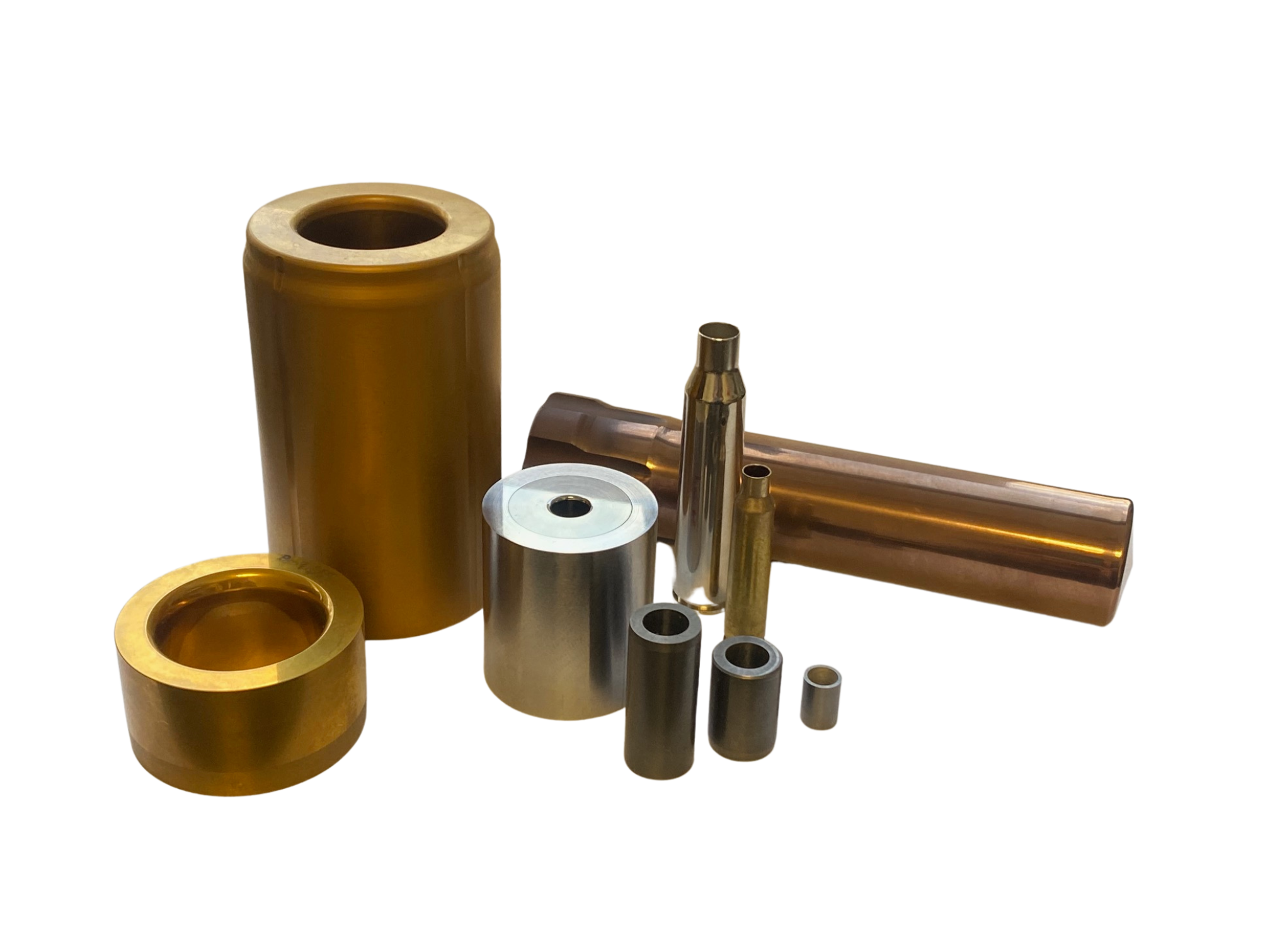
Cold forming requires tooling that can withstand extreme pressure and repeated impact. Carbide dies—specifically cold form dies—are preferred because carbide offers:
- exceptional wear resistance
- high compressive strength
- longer tool life under heavy loads
We manufacture precision cold form dies that maintain durability and dimensional accuracy even in demanding, high-speed production environments.
What Is Hot Forging?
Hot forging shapes metal at extremely high temperatures, often between 1,500°F and 2,200°F depending on the material. Heating the metal softens it, making deformation easier and more uniform.
Key Features of Hot Forging
- High-temperature forming: Reduces force needed to shape metal.
- Better ductility: Heated metal flows more easily into complex shapes.
- Strong metallurgical properties: Produces parts with excellent toughness and grain structure.
- Ideal for large components: Common in automotive, aerospace, agricultural, and heavy industrial applications.
Carbide Dies in Hot Forging
Although dies used in hot forging are exposed to high temperatures, carbide inserts are often used in key wear areas to maximize tool life and maintain precision. Carbide’s resistance to deformation and abrasion makes it a valuable material for:
- forging die inserts
- trim dies
- wear plates and tooling components subjected to extreme stress
We produce customized carbide components engineered to remain stable and durable under thermal and mechanical strain.
Cold Forming vs. Hot Forging: What’s the Difference?
While both processes shape metal through force, their differences are significant:
1. Temperature
- Cold Forming: Performed at room temperature.
- Hot Forging: Performed at elevated temperatures where metal becomes more malleable.
2. Material Behavior
- Cold Forming: Strain hardens the material, increasing strength.
- Hot Forging: Improves ductility and grain structure.
3. Tooling Requirements
- Cold Forming: Requires extremely strong tooling—carbide dies are widely used.
- Hot Forging: Uses high-temperature-resistant die materials, often incorporating carbide inserts for wear resistance.
4. Precision and Finish
- Cold Forming: Superior surface finish and accuracy.
- Hot Forging: Requires secondary machining for tight tolerances.
5. Best Use Cases
- Cold Forming: Fasteners, small hardware, high-volume components.
- Hot Forging: Structural parts, heavy-duty components, complex geometries.
Why Carbide Dies Matter in Both Processes
Carbide’s unmatched hardness and resistance to wear make it a critical material in both forming and forging operations. In cold forming, cold form dies ensure each strike and deformation maintains perfect accuracy, even after millions of cycles. In hot forging, carbide inserts reinforce the most vulnerable sections of the die to extend lifespan and reduce downtime.
With proper engineering and customization, carbide dies deliver:
- longer tool life
- better product consistency
- reduced cost per part
- improved production efficiency
Raven Carbide Die specializes in these precision-engineered solutions, providing manufacturers with tooling designed to support the unique demands of both cold forming and hot forging processes.
Partner with Raven Carbide Die for Precision Cold Form Dies and Forging Tooling
Whether your operation relies on cold forming, hot forging, or a combination of both, durable and precise tooling is the backbone of efficient production. We design and manufacture premium cold form dies, carbide inserts, and custom tooling engineered to withstand the demanding conditions of metal forming.
With decades of experience and a commitment to quality, we help manufacturers improve uptime, reduce tooling costs, and enhance part quality, no matter the production environment.
If you need cold form dies, forging die inserts, or custom carbide tooling built to last, our company is ready to help. Contact us today to get started!