

The oil and gas industry operates in some of the most demanding environments on Earth. Drilling operations require tools that can withstand extreme heat, immense pressure, high-speed rotational forces, and constant abrasion from abrasive slurries. This is where tungsten carbide steps in as an indispensable material—a composite renowned for its exceptional hardness and wear resistance.
The material’s primary function is to protect critical components, ensuring operational efficiency and extending the life of expensive drilling assemblies.
The Power of Tungsten Carbide (WC)
Tungsten carbide (WC) is a ceramic-metal composite (often referred to as a “cemented carbide”) that’s nearly as hard as diamond. It’s manufactured by sintering fine tungsten carbide particles with a softer metal binder, usually cobalt or nickel.
The resulting material possesses a unique combination of properties essential for drilling:
- Extreme Hardness: It provides superior resistance to abrasion caused by rocks, sand, and drilling mud.
- High Strength and Stiffness: It maintains structural integrity under massive axial and torsional loads.
- Corrosion Resistance: It resists chemical attack from various drilling fluids and downhole environments.
⚙️Wear Resistant Sleeves
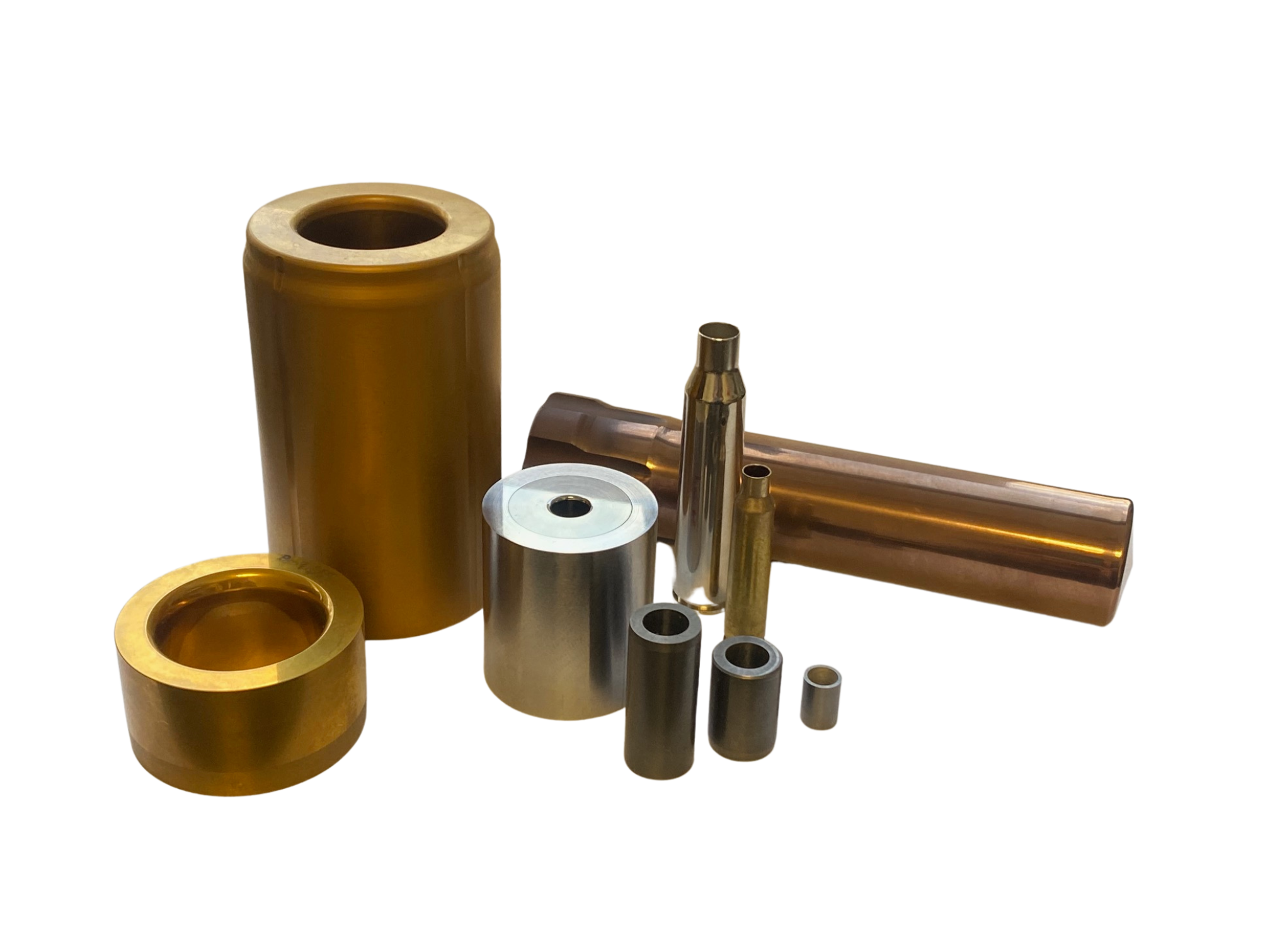
Wear resistant sleeves are components made from tungsten carbide that are designed to protect high-value drill string components from erosion and friction. A common example is the tungsten carbide sleeve used to protect the bearing assemblies and seal sections of downhole motors and measurement tools.
Function and Application
In a typical drilling operation, components are subjected to aggressive drilling mud—a circulating fluid containing abrasive solids that acts like liquid sandpaper.
- Protection for Seals: High-speed rotation generates friction and heat and can quickly degrade elastomeric (rubber) seals and bearings. By surrounding these vulnerable areas, the tungsten carbide sleeve absorbs the brunt of the abrasive wear.
- Extending Equipment Life: Replacing an entire downhole motor or rotary steerable system is extremely costly. By using an easily replaceable, highly wear-resistant sleeve, operators can maintain critical tolerances for extended periods, drastically reducing non-productive time (NPT) associated with equipment failure.
🛡️ Carbide Bushings
Carbide bushings (also known as plain bearings) are another critical application of tungsten carbide. They are precision-machined components used to guide, support, and reduce friction between moving parts, primarily within downhole pumps and mud motors.
Function and Application
- Radial Support: Bushings are essential for absorbing radial (side) loads. They prevent components like rotating shafts from vibrating excessively or contacting the housing under pressure.
- Controlling Thrust and Friction: In positive displacement motors (PDMs) or pumps, high-precision carbide bushings ensure the drive shaft remains aligned and minimizes energy loss due to friction. The low coefficient of friction, coupled with the extreme hardness of the tungsten carbide, allows the shaft to spin thousands of times per minute without significant wear.
- Severe Service Conditions: Unlike standard metal bushings, carbide bushings can maintain their precise dimensions and integrity in hot, high-pressure environments where the lubrication system may be compromised or rely solely on the abrasive drilling mud itself.
Ready to Optimize Your Drilling Efficiency?
The longevity and performance of your downhole assemblies rely on the quality and precision of materials like tungsten carbide. If your operation demands the highest quality tungsten carbide sleeves, carbide bushings, or other specialized wear resistant sleeves designed for the harshest environments, partner with a leader in the field.
Raven Carbide Die specializes in manufacturing precision-engineered tungsten carbide components that meet the rigorous specifications of the oil and gas industry. Contact Raven Carbide Die today to discuss custom solutions that can drastically reduce abrasive wear and non-productive time (NPT) for your most demanding drilling projects.